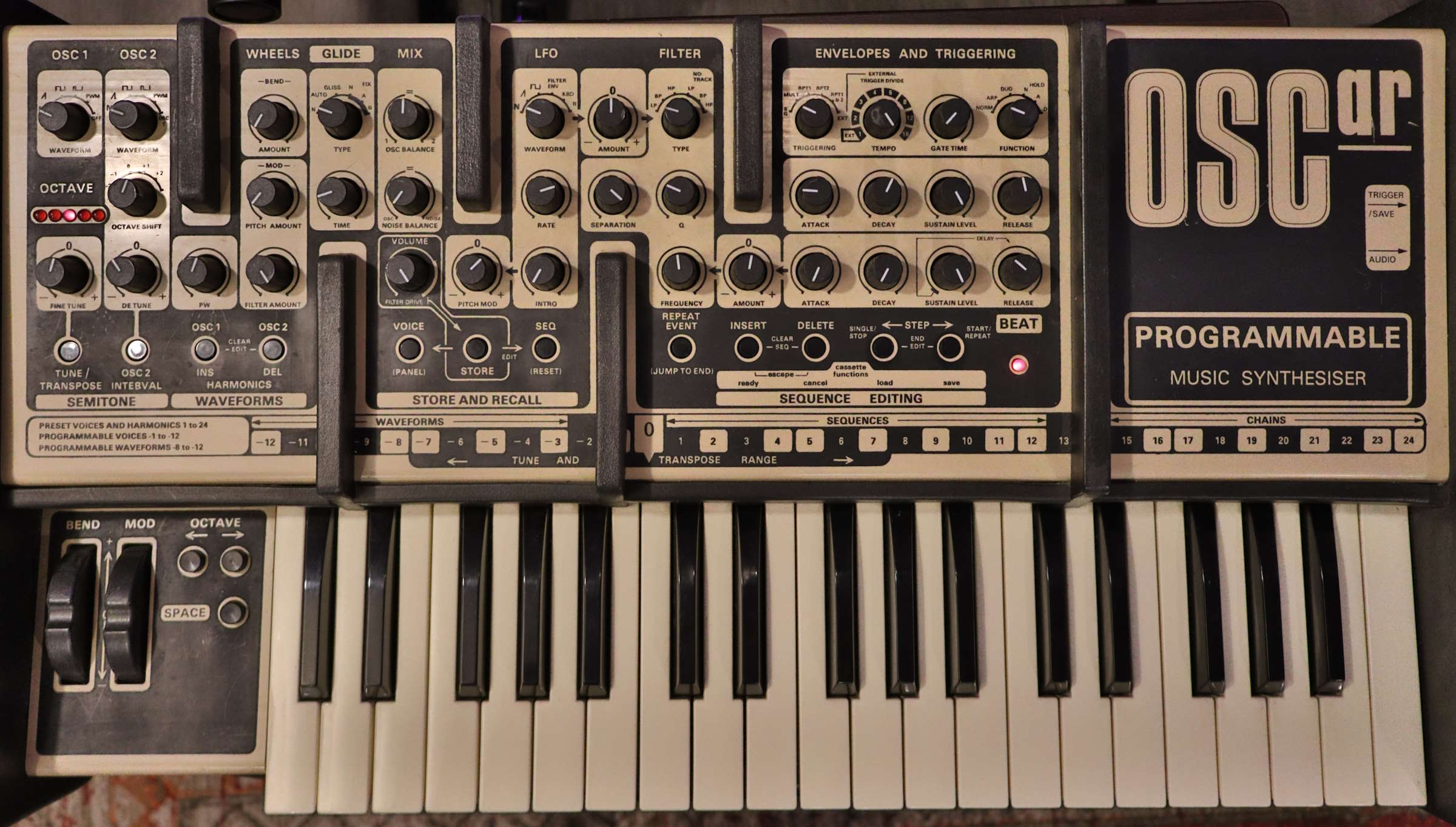
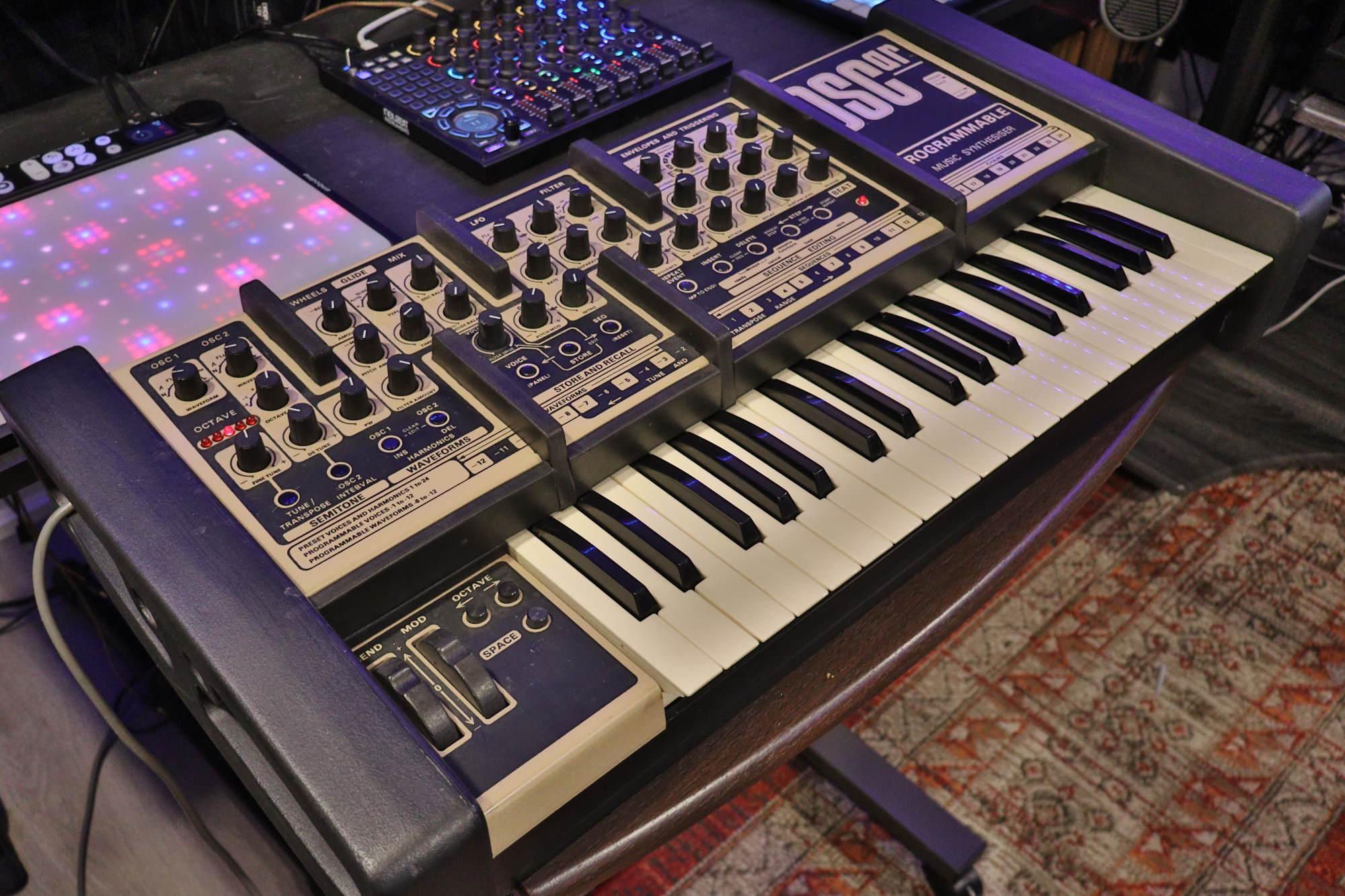
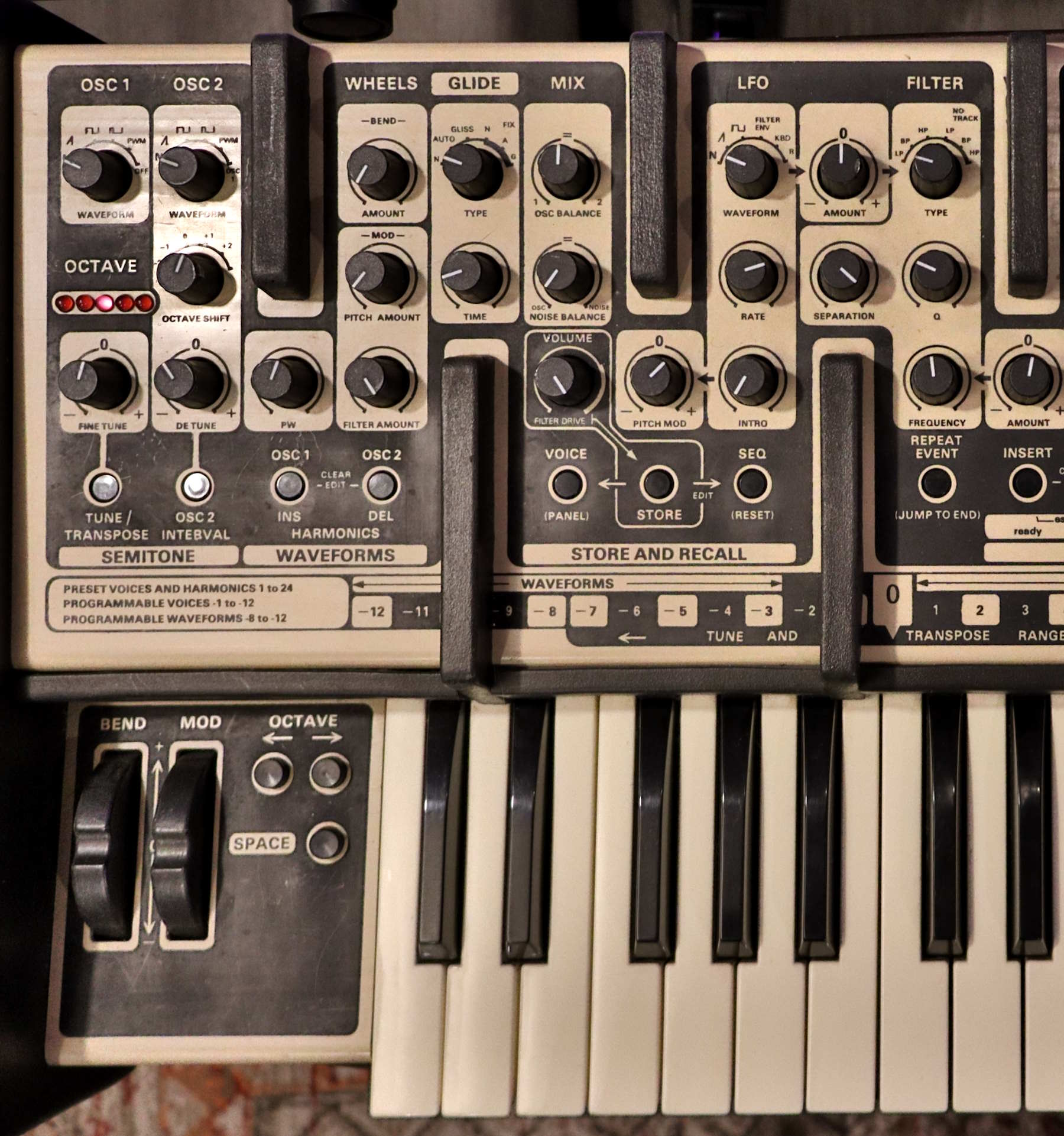
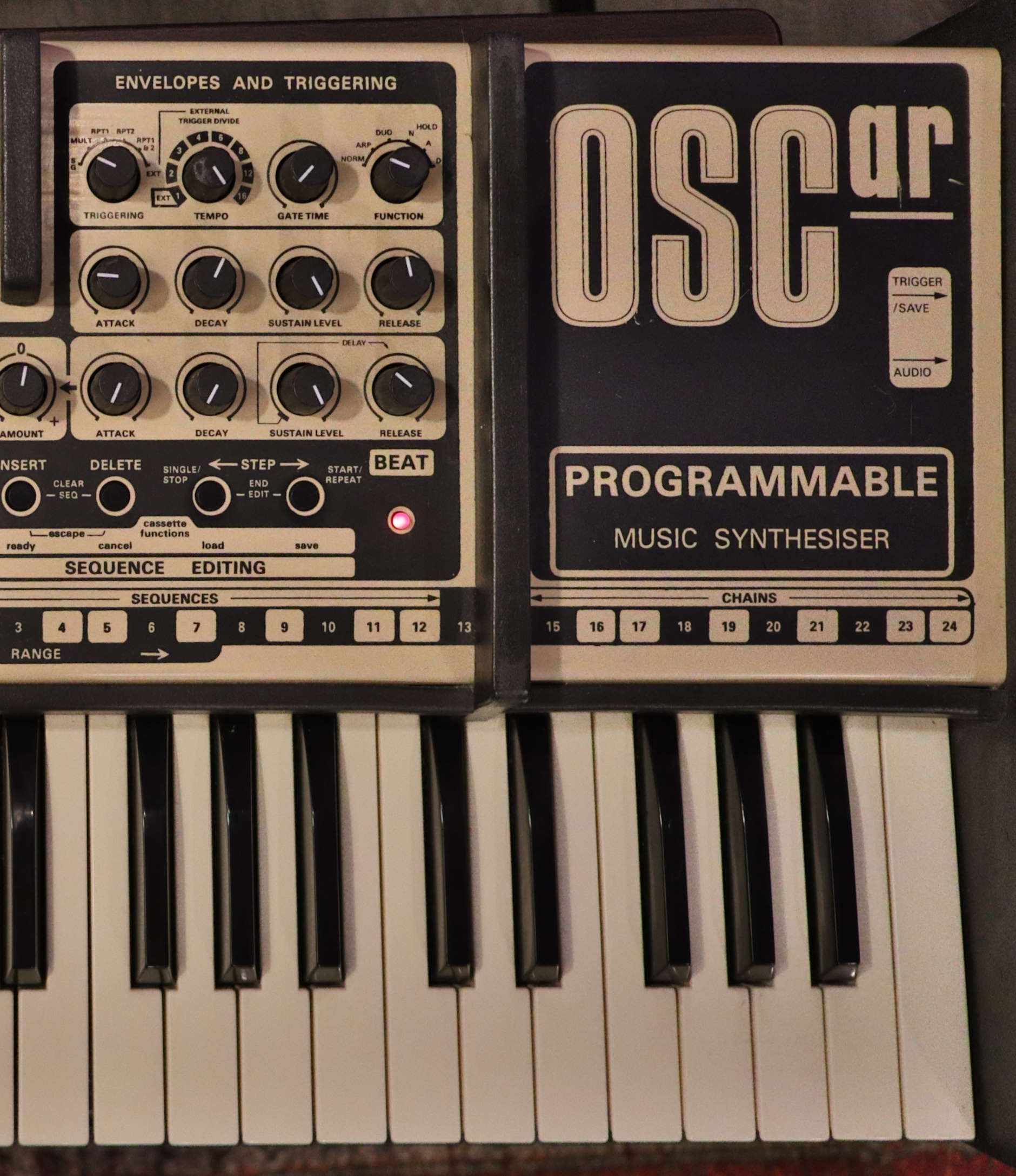
Oxford Synthesizer Company OSCar with factory MIDI. Designed by Chris Huggett, the engineer behind the EDP Wasp who later went on to design the Novation Bass Station, the OSCar arrived in 1983 and remains one of the most distinctive British synths ever built. Behind its unmistakable rubber end-cheeks and rugged, stage-ready chassis sits a fierce two-oscillator engine with a powerful multimode filter that can be pushed into gritty overdrive. It was also remarkably forward-thinking for its day: you could build your own waveforms through additive synthesis, store patches, and use the onboard arpeggiator and sequencer.
Only around 2,000 were ever made, and its huge, cutting mono sound earned it a place in the rigs of artists like Jean-Michel Jarre, Stevie Wonder, and Ultravox. This unit has the sought-after factory MIDI, as well as having the ability to have it’s internal arpeggiator or sequencer triggered by audio signals, allowing it to be easily integrated into many different modern workflows to deliver the punchy leads and snarling basses that make the OSCar a true collector's piece. This is a well maintained unit in good working order that has had some professional upkeep, including replacing the original volatile internal battery with a more stable modern one.
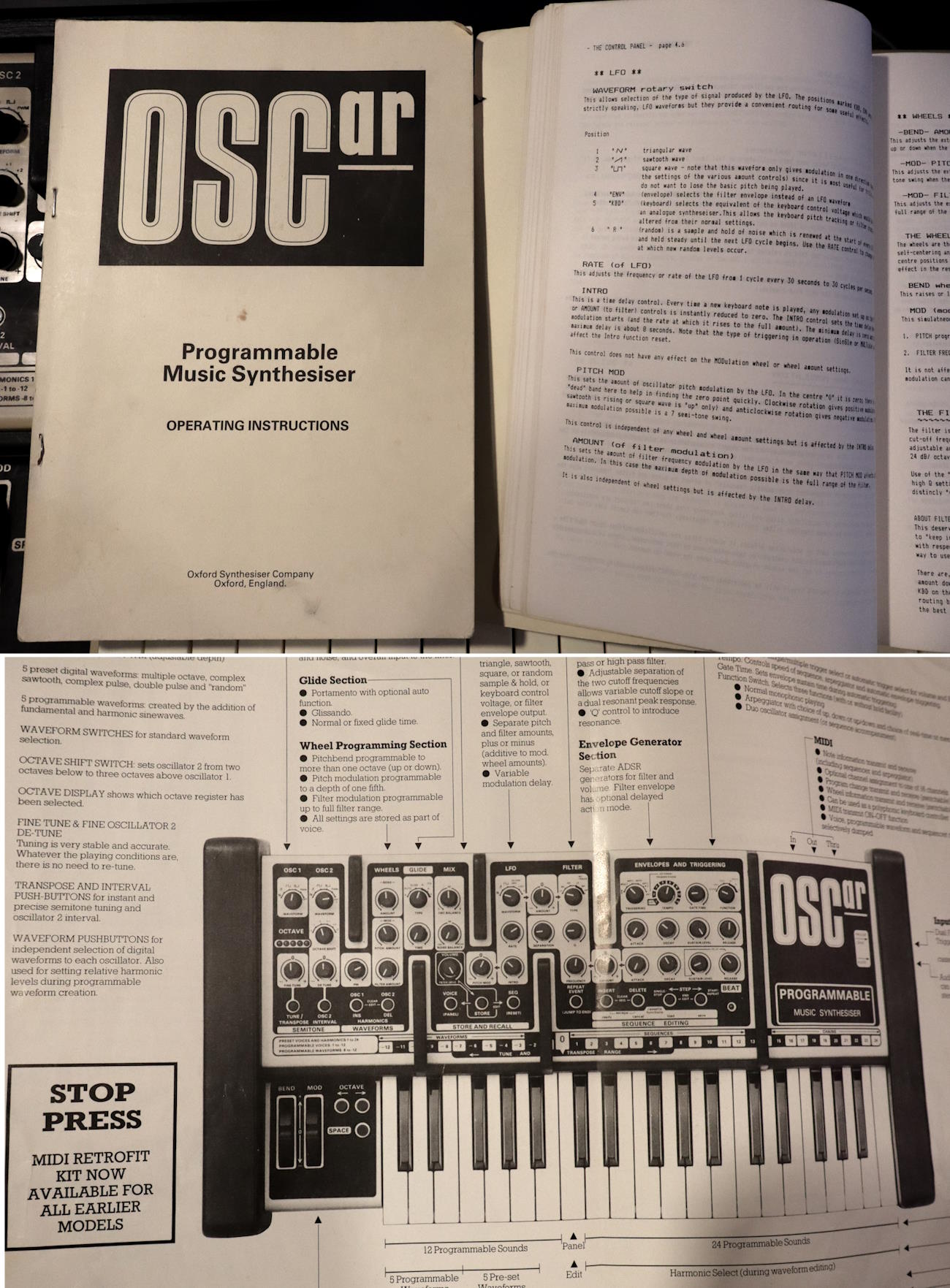
The good points - As mentioned above, the original had a battery that was known to eventually leak and destroy the motherboard. This one has a modern replacement. Aside from that, it’s all the original parts. Also, as mentioned above, this one has the factory MIDI which makes it more desirable. I have the original manuals as well as a vintage promotional pamphlet. As a bonus, I also happen to have the SYSex Files for the original factory library, which I can email to anyone who is interested.
The bad points - I noticed that the filter knob sounds a bit dirty and it’s not tracking 100% perfectly. **Excellent tech Dean Batute has now serviced it.
His report says that all pots and switches have been cleaned, but they are 40 years old, and not as good as new ones.**
As well, this unit has the 'M2 Firmware Glitch” - which dates back to its release, and prevents notes below the physical Middle C from being used in UPWARDS arpeggios. Because this glitch dates back to 1983, depending on the collector, it may actually be desirable. Regardless, it’s got an easy workaround - just switch octaves with the Octave buttons. Tauntek also offer an updated OS which cures this glitch, and other things assigns all parameters MIDI CC numbers, so they can be externally controlled without using the pots on the OSCar.
Unusually, this is 110V US/Canadian voltage, so a transformer would be needed in UK/Europe/Australia etc..